Central Project 1: Functional Microbiomics and Metabolomics Research

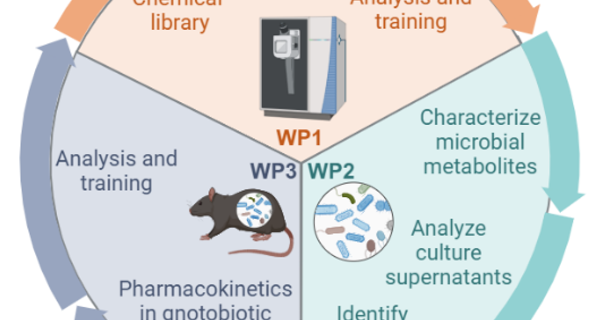
The central project 1 will support the GenoMiCC research unit by providing central metabolomics services, chemical libraries, and support with microbiome-specific animal models. By improving standardisation, developing more sensitive and quantitative analytical methods, and fostering larger collaborative studies, this central project aims to enhance the reproducibility and clinical relevance of microbiome and metabolomics findings in …

PD Dr. Nadja Meindl-Beinker

PD Dr. Nadja Meindl‑Beinker is a senior researcher at Heidelberg University’s Medical Faculty Mannheim in the Molecular Hepatology department. Since 2010, her work has centered on transforming growth factor‑β (TGF‑β) signaling and its complex roles in chronic liver disease and hepatocellular carcinoma . She earned her doctorate (Dr. rer. nat.) and completed postdoctoral research at Ruhr University …

Dr. Zhan Honored for Cancer Research

Dr. Tianzuo Zhan, in addition to his translational research leadership, has received notable awards including the 2020 German Cancer Aid travel grant and the 2019 Oncology Working Group Mannheim Award. His work in GI oncology continues to garner high recognition within the department.

New Core Facility for Liver Disease Research Launched

The Department of Medicine II has inaugurated a state-of-the-art Cell Isolation and Molecular Imaging Unit, funded by the BMBF under LiSyM and LiSyM–Cancer programs. Equipped with spatial biology tools like the GeoMx DSP, live-cell imaging systems, and AI‑based pattern recognition platforms, the facility supports both in-house projects and collaborative research across UMM.

Draft S3 Guideline for Colorectal Cancer Led by Prof. Matthias Ebert

The II. Medizinische Klinik under the leadership of Prof. Dr. Matthias Ebert has spearheaded the development of a new draft S3 guideline for colorectal cancer. Researchers and clinicians are now invited to review and provide feedback on the consultation version, which has recently been made publicly accessible. This milestone reflects the department’s active role in …

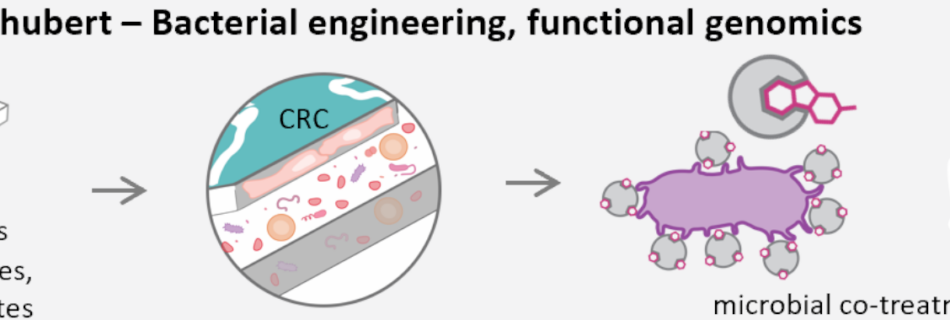
Project 8: Schürrle/Schubert – Bacterial engineering, functional genomics

S. Schürle and A. Schubert will use genome engineering with the aim to provide mechanistic insights into signalling pathways in the tumour–microbe–drug interplay. For this, they will utilise and optimise existing organ-on-a-chip models of CRC that mimic physiologically relevant biochemical and physical cues of tumour and metastatic niches. The system provides means to perform multiparametric …

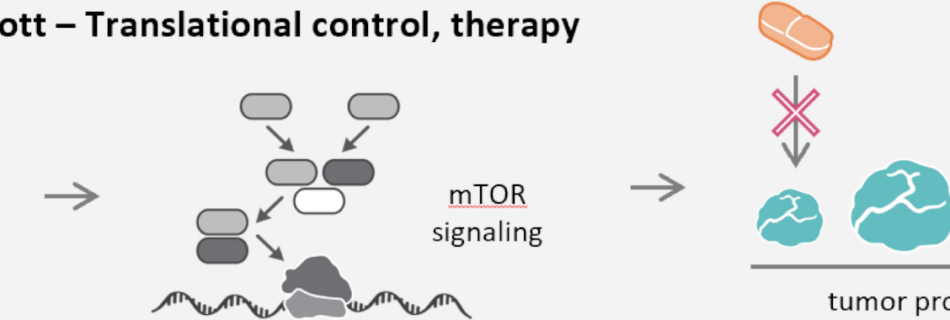
Project 7: Schott/Betge – Translational control, microbiome, therapy resistance

J. Betge and J. Schott hypothesise that specific microbial metabolites affect translation control and thereby plasticity and drug resistance in CRC, mediated by mTOR-dependent and -independent mechanisms. In P7 J. Betge and J. Schott will analyse the activity and heterogeneity of central regulators of translation in PDOs and mouse tumours upon treatment with standard-of-care drugs …

Project 6: Zaugg/Jackstadt – Microbes and cellular plasticity

J. Zaugg, formerly EMBL, now Basel University, and R. Jackstadt propose that complex transcriptional, epigenetic, and microbial changes are interconnected and foster enhanced phenotypic plasticity of metastatic and therapy resistant CRC.They aim to dissect underlying mechanisms that interconnect the microbiome and its metabolome with cell state dynamics and cellular plasticity to define actionable targets. To …

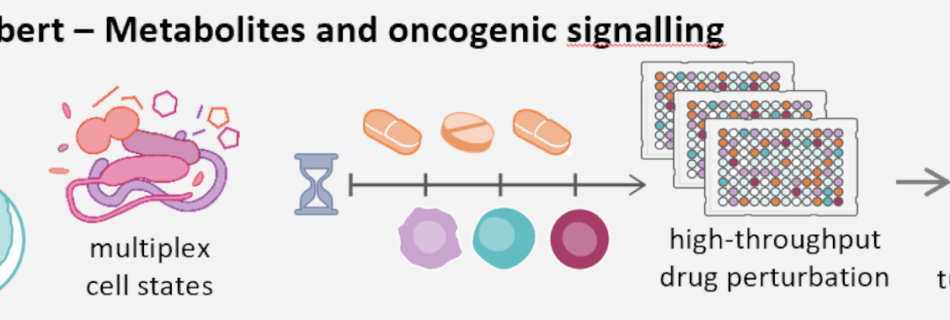
Project 5: Boutros/Ebert – Microbial metabolites and oncogenic signaling

M. Boutros and M. Ebert are interested in the impact of microbial-derived metabolites on tumor progression and treatment response with a focus on Wnt and MAPK signaling. They will utilize a large biobank of patient-derived organoids and perform genetic, transcriptomic and phenotypic profiling to facilitate insights in metabolite- oncogenic signaling-therapy response axis n CRC progression …