
Dissecting and understanding the gut and tumour microbial ecosystems and their adaptive changes during cancer progression and treatment resistance, together with the development of novel therapies targeting microbiota-drug-gene interactions opens new avenues for additional personalised treatment strategies for patients with advanced and treatment-resistant CRC.
Scientifically, our unique and interdisciplinary group of basic researchers and clinician scientists will collectively address the following core aims in our initiative:
- To characterise the interactions of microbiota and microbial metabolites with CRC during disease progression and in metastasis.
- To dissect the interaction of CRC genome alterations with microbiota and microbial metabolites in the context of cancer therapy.
- To characterise the impact of microbiota and their metabolites on tumour response to drug perturbations in CRC treatment and therapy resistance.
Ultimately, we plan to deliver novel pathways and checkpoints of microbiota-drug-gene interactions to target and overcome intrinsic and adaptive treatment resistance in CRC as well as new molecular and microbial (co-)targeting treatment strategies to increase druggability and accessibility of key targets and pathways in CRC, which will make next generation precision oncology a reality and lead to improved patient outcomes
Project 1: Zhan/Zimmermann-Kogadeeva – Microbiota drug metabolism
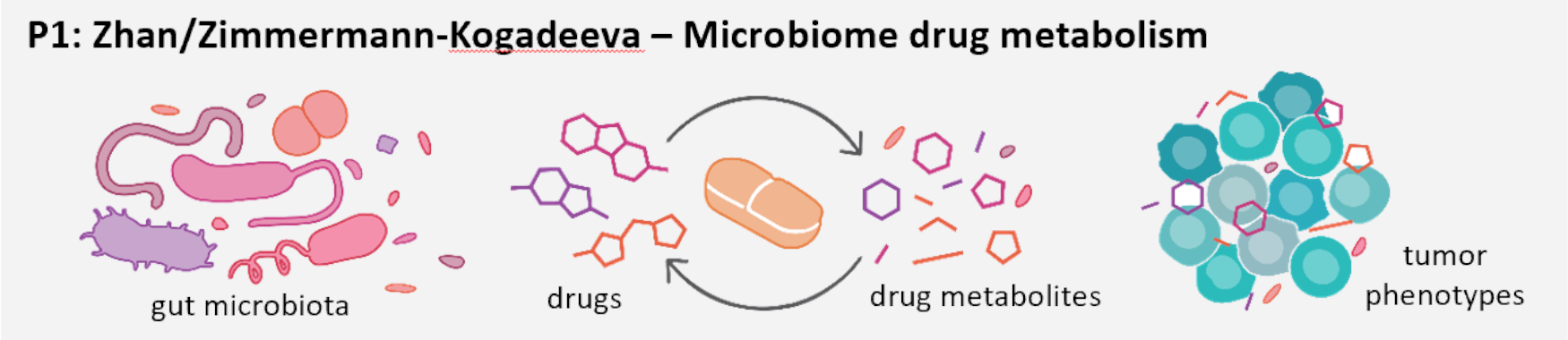
T. Zhan and M. Zimmermann-Kogadeeva propose to combine their complementary expertise in microbiome research and translational oncology to identify and characterise novel links between gut microbiome drug metabolism and response...
Project 2: Burgermeister/Zeller – Tumor resident microbiota
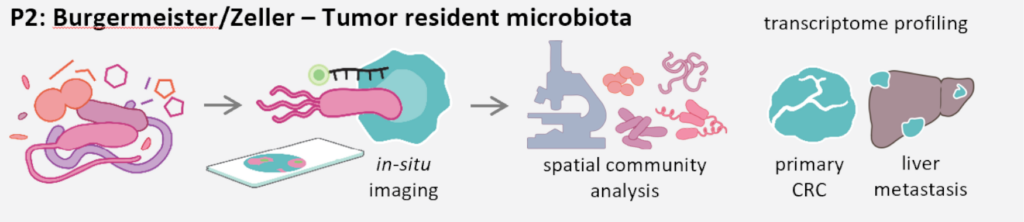
E. Burgermeister and G. Zeller will build on these spatial studies to reconstitute the key associations discovered in situ using PDO models from primary CRC tumours and metastases. This shall enable mechanistic...
Project 3: Hinze/Puschhof – Microbes, metabolism
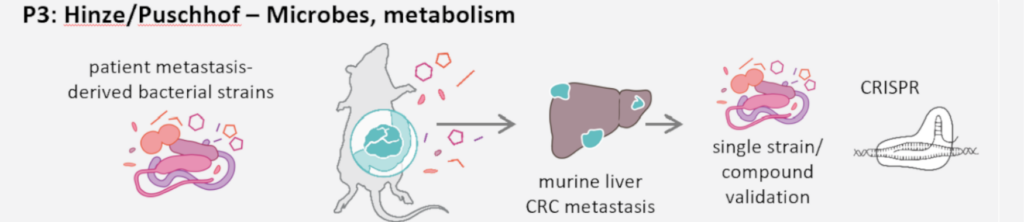
The functional implications of the intra-metastasis microbiome are also largely unknown. For this reason, L. Hinze and J. Puschhof hypothesise that the interplay of microbiota-derived factors and metabolic changes influences...
Project 4: Roberti/Rauber – Microbial metabolites & tumor immunogenicity
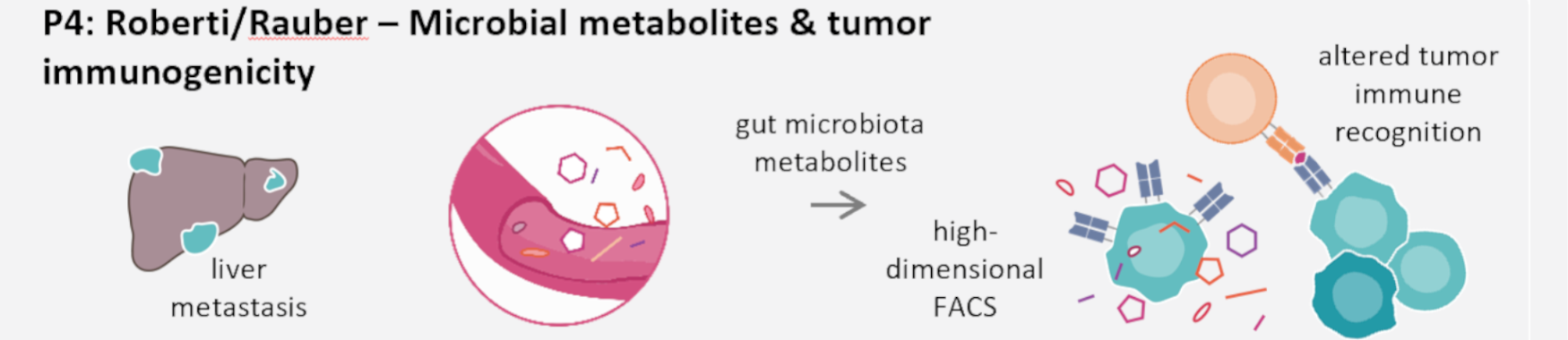
M.P. Roberti and C. Rauber aim to investigate the influence of gut microbiota-derived metabolites on CRC metastasis with a special focus on their modulation of tumour intrinsic pathways of immune...
Project 5: Boutros/Ebert – Microbial metabolites and oncogenic signaling
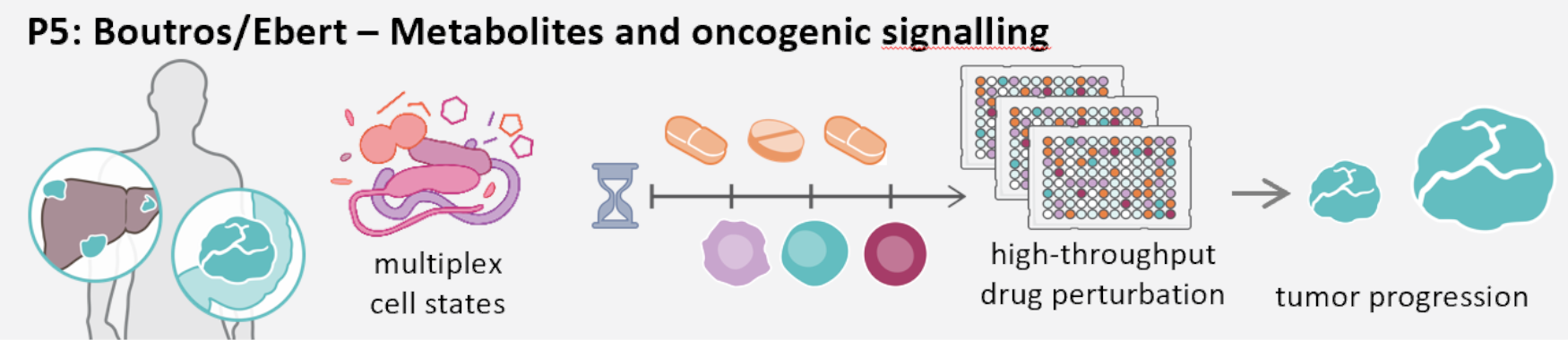
M. Boutros and M. Ebert are interested in the impact of microbial-derived metabolites on tumor progression and treatment response with a focus on Wnt and MAPK signaling. They will utilize...
Project 6: Zaugg/Jackstadt – Microbes and cellular plasticity
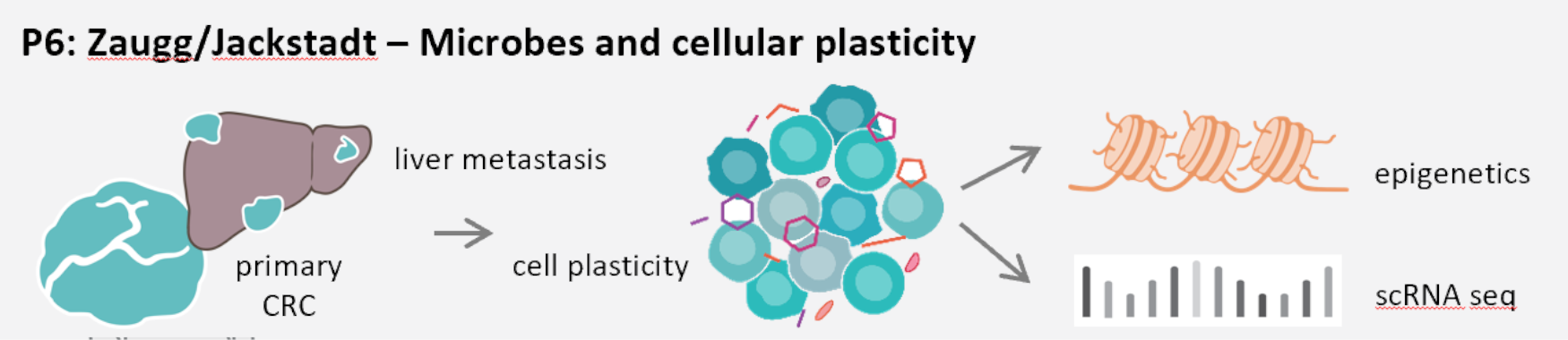
J. Zaugg, formerly EMBL, now Basel University, and R. Jackstadt propose that complex transcriptional, epigenetic, and microbial changes are interconnected and foster enhanced phenotypic plasticity of metastatic and therapy resistant...
Project 7: Schott/Betge – Translational control, microbiome, therapy resistance
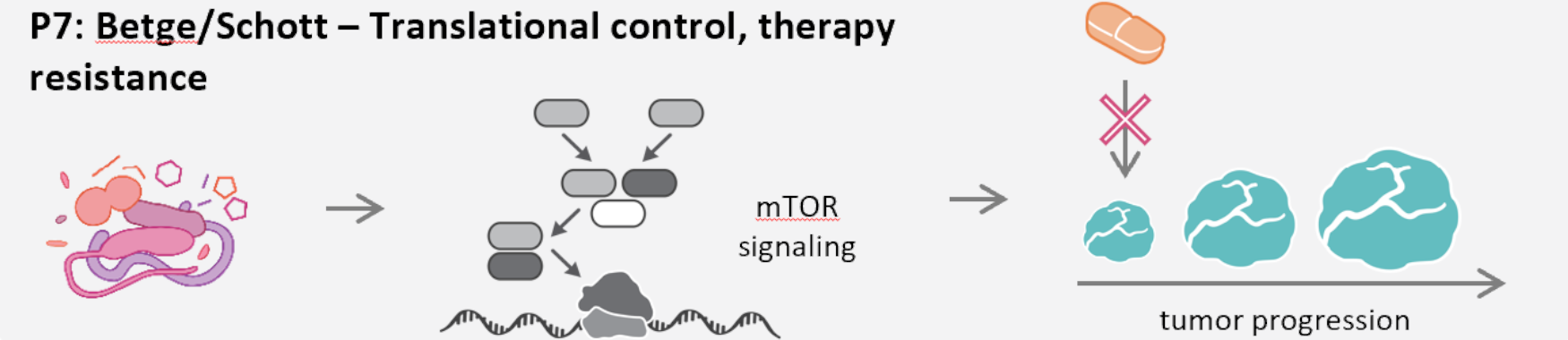
J. Betge and J. Schott hypothesise that specific microbial metabolites affect translation control and thereby plasticity and drug resistance in CRC, mediated by mTOR-dependent and -independent mechanisms. In P7 J....
Project 8: Schürrle/Schubert – Bacterial engineering, functional genomics
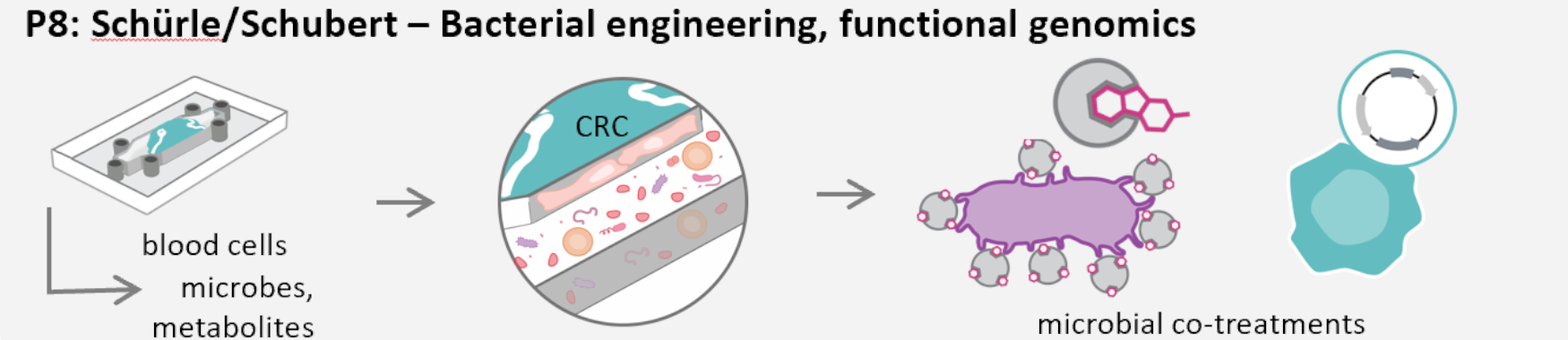
S. Schürle and A. Schubert will use genome engineering with the aim to provide mechanistic insights into signalling pathways in the tumour–microbe–drug interplay. For this, they will utilise and optimise...
Central Project 1: Functional Microbiomics and Metabolomics Research
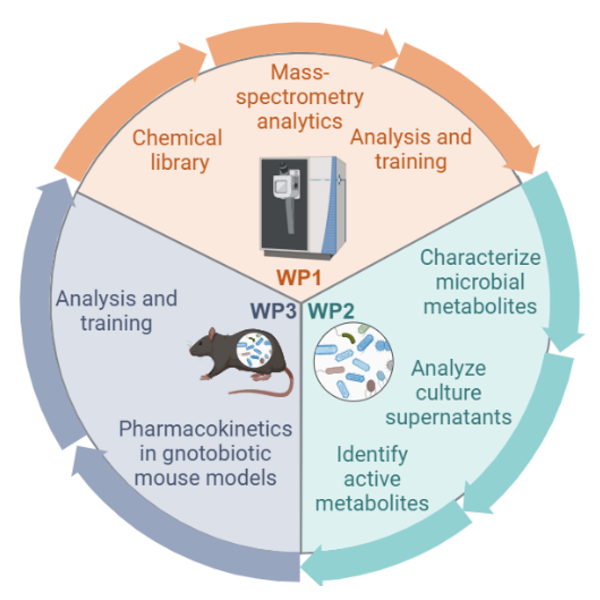
The central project 1 will support the GenoMiCC research unit by providing central metabolomics services, chemical libraries, and support with microbiome-specific animal models. By improving standardisation, developing more sensitive and...
Central Project 2: Data Management, Integration and Analysis
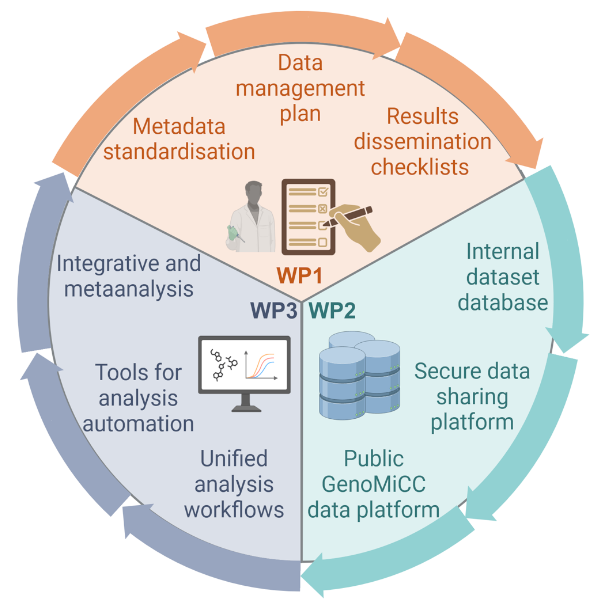
Central project 2 will provide data management expertise to all members of the consortium, unify data collection and analysis pipelines, and ensure sustainable use of all research data acquired during...